Wasps can be a common sight around homes, gardens, patios, and outdoor spaces, especially during warmer months. Seeing an occasional wasp near flowers or outdoor food does not necessarily mean you have an infestation. However, when wasps begin gathering around your home, building a nest near frequently used areas, or behaving aggressively, the situation deserves attention.
Unlike many household pests, wasps can pose a direct safety risk because they may sting when they feel threatened. Some species can sting repeatedly, and people who are allergic to wasp venom may experience serious reactions. Attempting to remove an established nest without the right knowledge or protective equipment can make the problem worse.
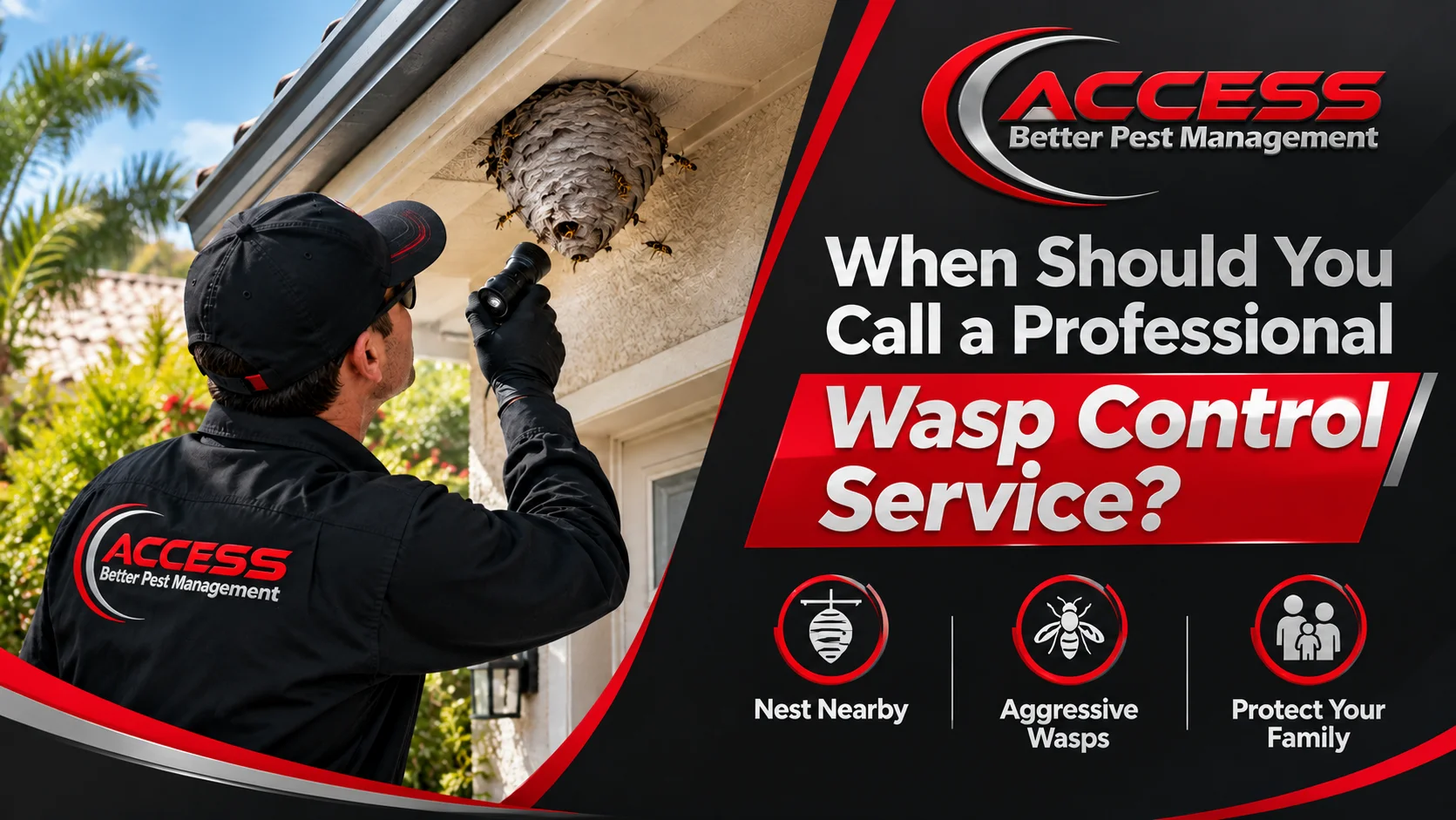
So, when should you call a professional wasp control service?
The answer depends on the nest’s location, the number of wasps you are seeing, their behavior, and whether anyone on your property could be at risk. Understanding the warning signs can help you decide when professional pest control is the safest option.
At Access Better Pest Management, we understand the importance of addressing stinging insect problems carefully. This guide explains when to seek professional help, why DIY nest removal can be dangerous, and how to reduce conditions that attract wasps around your property.
You Have Found a Wasp Nest Near Your Home
Finding a wasp nest is one of the clearest reasons to consider professional treatment. A nest may initially appear small, but wasp colonies can grow as the season progresses. More wasps may begin entering and leaving the same location, increasing the likelihood of accidental encounters.
Common places where wasps may build nests include:
- Under roof eaves and overhangs
- Inside wall cavities and gaps
- Around attic openings and roof spaces
- Beneath decks and porches
- Inside sheds, garages, and storage areas
- In shrubs, trees, and dense landscaping
- Around fences, outdoor structures, and playground equipment
Some nests are easy to notice because they hang from exposed surfaces. Others are hidden behind siding, inside wall voids, or underground. Ground-nesting yellow jackets, for example, may use existing holes or cavities to establish colonies.
If you notice wasps repeatedly entering and exiting one particular opening, avoid blocking it or disturbing the area. There may be a nest inside.
A professional inspection can help identify the activity, determine the likely nest location, and establish an appropriate treatment approach. Learn more about the company’s dedicated wasp control service to understand the type of pest problem that may require specialized attention.
Wasps Are Becoming Aggressive Around Your Property
Occasional wasp activity is not always a serious concern. However, repeated aggressive encounters should not be ignored.
Wasps may become defensive when someone approaches their nest, makes sudden movements nearby, or disturbs the surrounding area. Activities such as mowing, trimming bushes, moving outdoor furniture, or working around a deck can accidentally bring someone too close to a colony.
Warning signs include:
- Wasps repeatedly flying toward people.
- Multiple wasps gathering around the same location.
- Wasps following or circling people near a suspected nest.
- Increased activity around a particular wall, roofline, or garden area.
- Stinging incidents occurring in the same part of the property.
Aggressive behavior may indicate that a nest is nearby, although it is not possible to determine the nest’s location or species from behavior alone.
If wasps are repeatedly confronting people, keep children and pets away from the area. Do not attempt to swat them, spray them at close range, or investigate a suspected nest yourself.
A professional pest control technician can assess the activity and help determine the next steps.
Someone in Your Household Has a Wasp Sting Allergy
A wasp sting can cause temporary pain, redness, swelling, and itching. For most people, these symptoms remain localized. However, some individuals have severe allergic reactions to insect venom.
If someone in your household has a known allergy to wasp stings, even a nest that appears relatively small may present a significant safety concern.
Signs of a potentially severe allergic reaction include:
- Difficulty breathing or wheezing
- Swelling of the tongue or throat
- Dizziness or fainting
- Widespread hives or itching
- Vomiting or severe abdominal symptoms
- A sudden feeling of weakness or collapse
A suspected severe allergic reaction is a medical emergency. Call emergency services immediately and use prescribed epinephrine if available, following the person’s emergency action plan. Do not wait for pest control treatment to address an active medical emergency.
For households with known sting allergies, reducing exposure is especially important. If you discover a nest near an entrance, walkway, patio, or other regularly used area, contact a professional pest control provider rather than attempting removal yourself.
The Wasp Nest Is in a Difficult-to-Reach Location
Not all wasp nests are located in visible, accessible places. Some are established in areas that require specialized equipment or careful inspection.
Examples include:
- High rooflines and second-story eaves
- Attic spaces and roof cavities
- Inside exterior walls
- Behind shutters or siding
- Beneath elevated decks
- Inside enclosed sheds or structures
- Underground nests near walkways or lawns
Trying to reach these locations with a ladder, household tools, or store-bought insecticide can create additional hazards. A person may disturb the colony, fall while trying to escape, or accidentally expose themselves to multiple stings.
Hidden nests can also be difficult to treat because the visible entry point may not reveal the full extent of the colony.
A professional can evaluate access, locate signs of nesting activity, and determine an appropriate treatment method. If the activity is associated with other areas of the building, the company’s broader pest control services may also be relevant.
You Keep Seeing Wasps in the Same Area
One or two wasps passing through your yard may not indicate a nest. However, repeated activity in the same location is worth investigating.
Pay attention to patterns such as:
- Wasps entering and leaving the same small opening.
- Insects repeatedly gathering around one roof corner.
- Activity increasing around a specific tree or shrub.
- Wasps appearing around the same deck or outdoor seating area.
- Several wasps flying close to the ground near a possible burrow.
A consistent flight path can be a clue that a nest is nearby. Still, avoid following the insects closely or standing near a suspected entrance.
If the activity continues over several days or becomes more noticeable, a professional inspection can help determine whether a colony is present.
This is particularly important when the affected area is close to a front door, driveway, children’s play area, or other location where people regularly walk.
You Have Already Tried DIY Wasp Control Without Success
Many homeowners consider store-bought sprays or homemade remedies when they first notice wasps. While some consumer products are designed for specific flying insects, they may not resolve an established colony.
DIY treatment can fail for several reasons:
- The actual nest has not been located.
- The product is not suitable for the wasp species.
- The nest is hidden inside a wall or other enclosed space.
- The treatment does not reach the colony.
- Wasps continue using an untreated entry point.
- The application disturbs the colony without eliminating the problem.
Another concern is personal exposure. Spraying an active nest from close range can provoke defensive behavior and increase the risk of multiple stings.
Avoid repeatedly applying different chemicals or mixing household products. Follow all product labels and do not use pesticides in ways that are not specifically permitted.
If your initial efforts have not resolved the activity, stop disturbing the area and contact a qualified pest control professional. An inspection can help identify why the problem persists and what treatment may be appropriate.
Wasps Are Nesting Near Children, Pets, or High-Traffic Areas
A wasp nest can become a bigger concern when it is located somewhere people cannot easily avoid.
Consider the following locations:
- Near a front or back entrance
- Beside a frequently used walkway
- Around a swimming pool or patio
- Near outdoor dining spaces
- Close to children’s play equipment
- Around pet feeding areas
- Beside a garage or frequently opened shed
Children and pets may unknowingly approach a nest. Running, playing, gardening, or moving outdoor equipment can disturb wasps, especially when the nest is concealed.
Until the problem is assessed, keep people and animals away from the affected area. Use another entrance if possible, avoid placing outdoor furniture near the activity, and do not allow children to investigate the insects.
Professional wasp control is particularly important when the nest is close to a location that cannot realistically be avoided.
You Suspect a Nest Inside a Wall, Attic, or Roof Space
Wasps do not always build exposed nests. Some species may use cavities in buildings, including gaps in walls, roof spaces, and other protected areas.
You might notice:
- Wasps repeatedly entering a small exterior gap.
- Insects appearing inside a room near a ceiling or wall.
- Increased activity around attic vents.
- Wasps emerging from roofline openings.
- Persistent buzzing or insect activity around an enclosed space.
Do not seal the opening immediately. If a colony is inside, blocking its access without addressing the underlying problem may cause wasps to seek another route, potentially into the interior of the building.
Likewise, avoid cutting into walls or removing building materials to investigate.
A professional inspection can help establish whether the activity is associated with a hidden nest and determine how it should be addressed. If the issue involves other building-related pest concerns, you can also explore Access Better Pest Management’s attic insulation and air duct services.
Wasp Activity Is Increasing as the Season Progresses
Wasp activity often changes throughout the year. In many areas, colonies become more noticeable during warmer months as they grow and workers become more active.
As a colony develops, you may see more wasps searching for food, visiting outdoor spaces, or defending their nest. Late-season activity can also become more noticeable around food, sugary drinks, garbage containers, and outdoor gatherings.
Seasonal activity alone does not mean you have an infestation. However, an increase in wasps around the same part of your property can be a warning sign.
Pay attention to changes over time. If a few occasional sightings turn into regular groups of wasps around an entrance, patio, or roofline, consider arranging a professional inspection.
Early attention can help you address a problem before it becomes more disruptive.
You Have Experienced Multiple Wasp Stings on Your Property
Repeated stinging incidents should never be dismissed as ordinary outdoor activity.
If several people have been stung in the same area, or if someone is repeatedly encountering defensive wasps near a particular location, a nest may be nearby.
Multiple stings can be particularly dangerous for young children, older adults, pets, and people with known allergies. Even individuals without a known allergy should take repeated exposure seriously.
If someone experiences severe symptoms after a sting, seek emergency medical assistance immediately.
Once everyone is safe, avoid the affected area and contact a pest control professional to assess the source of the activity.
Why Professional Wasp Control Is Safer Than DIY Nest Removal
Removing a wasp nest is not the same as spraying an occasional insect. An established colony may contain many defensive workers, and disturbing it can trigger a rapid response.
Professional wasp control offers several important advantages.
Proper Identification
Different stinging insects have different nesting habits and behaviors. Paper wasps, yellow jackets, and hornets may require different inspection and treatment approaches.
Correct identification helps determine the type of activity and the most appropriate response.
It is also important to distinguish wasps from bees. Bees are valuable pollinators, and a bee colony may require a different approach, such as specialized removal or relocation where feasible.
For concerns involving honeybees or other bees, learn more about bee removal services.
Safer Inspection
A professional technician can assess the location of the nest, the surrounding conditions, and potential exposure risks.
This is particularly useful when the nest is hidden, elevated, or located close to areas where people spend time.
Appropriate Treatment Methods
The correct treatment depends on the insect, nest location, accessibility, and site conditions. A professional can select an appropriate approach rather than relying on guesswork.
Attention to the Source of the Problem
Simply treating visible wasps may not resolve an established nesting problem. Identifying where the insects are coming from is an important part of determining the next steps.
Guidance for Preventing Future Activity
After addressing the immediate issue, a pest control professional may be able to identify conditions that could encourage future nesting, such as accessible gaps, sheltered spaces, or food sources.
What Should You Do Before the Professional Arrives?
Once you have arranged professional wasp control, a few precautions can help reduce the risk of accidental encounters.
Keep Your Distance
Do not approach, touch, knock down, or attempt to inspect the nest. Avoid standing near the suspected entrance or flight path.
Keep Children and Pets Away
Restrict access to the affected area. If the nest is near a play area, patio, or walkway, use another route until the problem has been assessed.
Avoid DIY Spraying
Do not apply additional insecticides to an active nest before the inspection unless specifically instructed by a qualified professional. Spraying can disturb the colony and may complicate treatment.
Do Not Block Nest Entrances
Avoid sealing holes, cracks, or openings where wasps are entering and leaving. If the colony is inside a wall or cavity, blocking the entrance may create additional problems.
Share Useful Information
When contacting the pest control company, explain:
- Where you have seen wasps.
- How long the activity has been occurring.
- Whether you have located a suspected nest.
- Whether the nest is near an entrance or high-traffic area.
- Whether anyone has been stung.
- Whether anyone on the property has a known sting allergy.
These details can help the company understand the situation before the inspection.
How to Reduce the Chances of Future Wasp Problems
Although no prevention method can guarantee that wasps will never nest on your property, reducing attractive conditions may help.
Keep Outdoor Food Covered
Wasps may be attracted to exposed food, sugary drinks, and food scraps. Cover dishes during outdoor meals and clean up spills promptly.
Secure Garbage Containers
Use tightly fitted lids and clean containers regularly to reduce access to food residue.
Check Exterior Gaps
Inspect areas around rooflines, siding, vents, and exterior structures for gaps that may provide access to protected spaces. Have suitable repairs completed where needed, but never seal an active nest entrance before the colony has been professionally addressed.
Maintain Landscaping
Trim overgrown vegetation where practical and keep outdoor storage areas organized. This can make it easier to notice insect activity and inspect areas around the home.
Inspect Outdoor Structures
Periodically check sheds, decks, eaves, fences, and other sheltered locations for early signs of nesting activity. Observe from a safe distance.
Address Other Pest Issues
A well-maintained property and a broader pest management plan can help you stay aware of conditions that attract unwanted insects. Depending on your property’s needs, you may also want to learn about ant control services and mosquito control services.
Professional Wasp Control for Properties in Southern California
Wasp concerns can affect homes and businesses across different parts of Southern California. Warm weather and outdoor living spaces can make stinging insect activity a recurring concern for property owners.
Access Better Pest Management provides pest control services in multiple communities. If you are looking for local information, explore the company’s service pages for:
- Pest control services in Corona, CA
- Pest control services in Lake Elsinore, CA
- Los Angeles, CA
- Long Beach, CA
- Huntington Beach, CA
- Santa Ana, CA
- Irvine, CA
- San Dimas, CA
- Lakewood, CA
- Cerritos, CA
- Venice, CA
- Baldwin Hills, CA
- Windsor Hills, CA
- Mar Vista, CA
- View Park, CA
- Palm Springs, CA
Visit the service areas page to explore additional locations and confirm whether service is available in your neighborhood.
When Is It Time to Contact Access Better Pest Management?
You should consider professional wasp control when you discover an established nest, notice repeated wasp activity, experience aggressive encounters, or find a nest near children, pets, entrances, and frequently used outdoor spaces.
You should also seek help when a nest is hidden inside a wall or roof, when DIY efforts have failed, or when someone in your household has a known allergy to wasp stings.
The safest approach is to avoid disturbing the nest and arrange an assessment from a pest control professional.
Access Better Pest Management can help you understand your pest control options and determine the next steps for addressing wasp activity. To discuss your concerns, visit the contact page or explore the company’s wasp control service.
Do not wait for a dangerous encounter before taking action. If you suspect an active wasp nest around your home or business, keep your distance and seek professional guidance.
Frequently Asked Questions About Professional Wasp Control
1. When should I call a professional wasp control service?
Contact a professional when you find an established nest, notice repeated wasp activity in one location, experience aggressive encounters, or discover a nest near people, pets, entrances, or outdoor living areas. Professional help is also advisable when the nest is hidden or difficult to reach.
2. Is it safe to remove a wasp nest myself?
DIY removal can be dangerous, especially when the nest is active, large, elevated, or hidden inside a structure. Disturbing a colony can cause wasps to defend the nest. Professional inspection and treatment are generally safer options for established nests.
3. How can I tell if there is a wasp nest near my house?
Repeatedly seeing wasps enter and exit the same opening, gather around a roofline, or fly toward one particular area may indicate a nearby nest. Do not approach the suspected location to investigate. A professional can assess the activity.
4. Can wasps build nests inside walls?
Yes. Some wasps may establish nests in wall cavities, roof spaces, and other sheltered openings. Repeated activity around a small exterior gap may indicate nesting inside. Avoid sealing the opening until the situation has been professionally assessed.
5. Are wasps dangerous to children and pets?
Wasps can sting when they feel threatened, and children and pets may accidentally disturb a nest. The risk is higher when a colony is close to play areas, walkways, patios, or entrances. Keep children and pets away from suspected nesting areas.
6. What should I do if someone is allergic to wasp stings?
Keep the person away from suspected nests and arrange professional attention for the pest issue. If a sting causes difficulty breathing, throat or tongue swelling, faintness, or other signs of a severe allergic reaction, call emergency services immediately and use prescribed epinephrine if available.
7. Will spraying individual wasps get rid of a nest?
Not necessarily. Treating individual wasps may not address the colony or the nest itself. If you continue seeing wasps entering and leaving the same location, the underlying nesting activity may remain.
8. Should I block a hole where wasps are entering?
No. Do not block a suspected nest entrance before the colony has been assessed. Wasps inside a wall or enclosed space may seek another way out, potentially moving into the building’s interior.
9. Are wasps and bees treated the same way?
No. Wasps and bees have different behaviors and ecological roles. Bees are important pollinators, and their removal may require a specialized approach. Correct identification is important before deciding how to handle the situation.
10. Does Access Better Pest Management offer wasp control?
Access Better Pest Management has a dedicated wasp control service page. Contact the company directly to discuss your situation, confirm service availability, and learn about the appropriate next steps for your property.